All about product
 Reviews
 INSTRUCTION FOR USE


Product Description
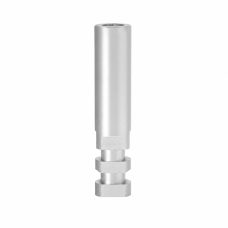
The Titanium Conical Abutment CH2.43 – 1 mm for Immediate Loading is a multifunctional prosthetic component designed for immediate implant placement, one-stage surgical protocols, healing, and cement-retained restorations on implants with a Conical Connection CH2.43 platform.
Manufactured from high-quality Ti6Al4V medical titanium alloy ASTM F136, the abutment provides exceptional biocompatibility, corrosion resistance, and mechanical strength for reliable long-term clinical performance.
The abutment is supplied in a straight configuration with a prosthetic shoulder and incorporates a conical connection combined with a 2.43 mm anti-rotation hexagon. This design provides excellent stability, precise positioning, and reliable resistance to rotational forces between the implant and prosthetic restoration.
The Titanium Conical Abutment CH2.43 – 1 mm is a versatile component that can be used during multiple stages of treatment. It serves as an implant carrier during packaging, an implant driver during implant placement, a healing abutment for one-stage surgical procedures, and a prosthetic abutment for temporary and permanent cement-retained restorations.
The component connects directly to compatible Conical Connection CH2.43 implants and is secured using Titanium Screw (701203).
Specifications
- Product Type: Titanium Conical Abutment for Immediate Loading
- Implant Connection: Conical Connection CH2.43
- Configuration: Straight
- Connection Design: Cone + Hexagon 2.43 mm
- Anti-Rotation Feature: Yes
- Shoulder Diameter: 4.5 mm
- Shoulder Height: 1.0 mm
- Material: Ti6Al4V Medical Titanium Alloy ASTM F136
- Fixation Screw: Titanium Screw (701203)
- Restoration Type: Cement-retained restorations
- Sterilization: Fully autoclavable
Compatible Implant Systems
- UMI Implants Diameters: Ø4.2 mm, Ø5.0 mm, Ø6.0 mm
- PMI Implants Diameters: Ø5.0 mm, Ø6.0 mm
Compatible Components
- Titanium Screw (701203)
- Conical Connection CH2.43 Implants
- Temporary Crowns
- Permanent Crowns
- Cement-Retained Restorations
- CAD/CAM Restorations
Indications for Use
Intended for use as:
- Implant carrier in sterile packaging
- Implant driver during implant placement
- Healing abutment in one-stage surgical procedures
- Temporary crown abutment
- Permanent crown abutment
- Cement-retained restorations
- Immediate loading restorations
- CAD/CAM restorative procedures
Advantages
- Multi-functional component for surgical and prosthetic procedures
- Designed specifically for Conical Connection CH2.43 implants
- Conical connection with 2.43 mm anti-rotation hex
- Suitable for immediate loading protocols
- Functions as implant carrier, driver, healing abutment, and restorative abutment
- Supports temporary and permanent restorations
- Ideal for cement-retained prosthetic restorations
- Compatible with CAD/CAM and conventional workflows
- High-strength Ti6Al4V ASTM F136 titanium construction
- Excellent bio-compatibility and corrosion resistance
- Precision-machined restorative interface
- Reliable long-term clinical performance
- Fully autoclavable
Sterilization
Before use, sterilization in an autoclave at a temperature of 135°C (274°F) is required.

Reviews
There are no reviews for this product, be the first to leave your review.


Titanium Conical Abutment CH2.43 – 1 mm for Immediate Loading
Intended Use
The Titanium Conical Abutment CH2.43 – 1 mm for Immediate Loading is intended for use with compatible Conical Connection CH2.43 implants during surgical and prosthetic procedures. The component functions as an implant carrier, implant insertion driver, healing abutment, and prosthetic abutment for cement-retained temporary and permanent restorations.
The abutment is designed to support immediate loading protocols and one-stage implant procedures while providing a stable platform for long-term restorative treatment.
Indications
The Titanium Conical Abutment CH2.43 – 1 mm is indicated for:
- Immediate loading restorations
- One-stage implant surgery
- Implant placement procedures
- Implant insertion and delivery
- Healing abutment applications
- Temporary crown restorations
- Permanent crown restorations
- Cement-retained restorations
- CAD/CAM restorations
- Implant-supported prosthetic rehabilitation
Clinical Procedure
1. Implant Delivery and Placement
Implant Carrier Function
- Remove the sterile implant package according to the surgical protocol.
- Verify package integrity before opening.
- The Titanium Conical Abutment may serve as the implant carrier during implant removal from the sterile package.
- Maintain aseptic technique throughout the procedure.
Implant Driver Function
- Engage the abutment with the implant.
- Verify complete connection between the implant and abutment.
- Use the abutment as the implant driver according to the implant placement protocol.
- Insert the implant into the prepared osteotomy site.
- Achieve the desired implant position and primary stability.
2. One-Stage Healing Procedure
Healing Abutment Function
- Following implant placement, verify correct positioning of the abutment.
- Ensure the shoulder height is appropriate for soft tissue management.
- Leave the abutment in place during healing according to the treatment plan.
- Monitor soft tissue healing during follow-up appointments.
3. Immediate Loading Procedure
- Confirm adequate primary implant stability before immediate loading.
- Verify complete seating of the Titanium Conical Abutment.
- Tighten the fixation screw (701203) according to the implant manufacturer's recommended torque values.
- Check stability and alignment before restoration placement.
4. Restoration Fabrication
Temporary Restoration
- Fabricate the provisional crown according to the treatment plan.
- Verify fit, emergence profile, and occlusion.
- Adjust as necessary before final placement.
Permanent Restoration
- Obtain a conventional or digital impression.
- Design the final restoration.
- Fabricate the crown using conventional laboratory techniques or CAD/CAM technology.
- Verify marginal adaptation and prosthetic fit.
5. Restoration Delivery
Cement-Retained Restoration
- Verify complete seating of the restoration on the abutment.
- Check proximal contacts and occlusal relationships.
- Apply appropriate dental cement according to the cement manufacturer's instructions.
- Seat the restoration completely.
- Remove all excess cement.
- Verify final occlusion and esthetics.
Final Restoration Verification
Before treatment completion:
- Verify complete seating of the abutment.
- Confirm engagement of the conical connection and anti-rotation hex.
- Check restoration stability.
- Verify occlusal contacts.
- Confirm esthetics and soft tissue adaptation.
- Remove excess cement completely.
- Obtain radiographic verification if indicated.
Removal Procedure
Cement-Retained Restoration
- Remove the restoration according to standard clinical procedures.
- Inspect the abutment and implant connection.
- Clean all components thoroughly.
- Replace damaged components if necessary.
Abutment Removal
- Access the fixation screw.
- Loosen and remove Titanium Screw (701203).
- Remove the abutment carefully from the implant connection.
- Inspect the implant interface before reinstallation.
Cleaning and Sterilization
- Remove all contaminants and manufacturing residues.
- Clean using approved medical device cleaning procedures.
- Rinse thoroughly with distilled or deionized water.
- Dry completely before sterilization.
- Sterilize before use in a steam autoclave at: 135°C (274°F)
- Follow validated sterilization procedures and local regulatory requirements.
Warnings and Precautions
- For professional dental use only.
- Use only with compatible Conical Connection CH2.43 implant systems.
- Use only with Titanium Screw (701203).
- Verify complete seating before tightening.
- Follow recommended torque values.
- Immediate loading should only be performed when sufficient primary implant stability is achieved.
- Carefully remove excess cement to reduce the risk of peri-implant complications.
- Do not use damaged or deformed components.
- Replace components showing signs of wear, deformation, or damage.
Storage
Store in a clean, dry environment protected from contamination, moisture, and mechanical damage.