

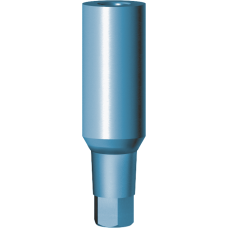
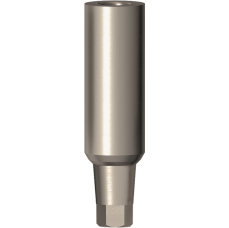
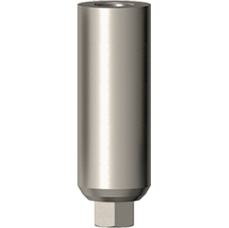
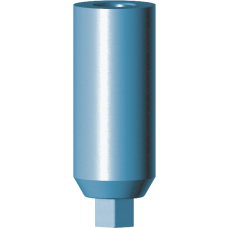
Abutments for Turning
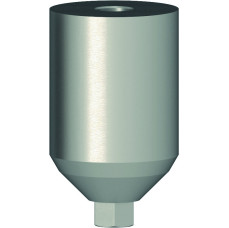
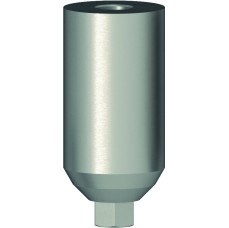
DMi Abutments for Turning are precision-manufactured prosthetic components designed for laboratory customization and mechanical modification to create individualized implant-supported restorations.
The extended and modifiable design provides dental technicians and clinicians with flexibility to adjust the abutment shape, height, contour, and restorative profile according to the requirements of the individual prosthetic case. This allows the abutment to be customized to accommodate available restorative space, implant position, soft-tissue conditions, and the planned final restoration.
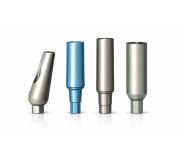
Available in different diameters, heights, platforms, and connection types, DMi Abutments for Turning provide versatile solutions for customized restorative workflows.
Manufactured from high-quality biocompatible titanium and produced under strict quality standards, DMi Abutments for Turning are engineered for accurate implant connection, reliable performance, and efficient laboratory processing.
Key Features
- Designed for turning, milling, and laboratory customization
- Allows modification of abutment height, diameter, shape, and contour
- Provides flexibility for individualized prosthetic restorations
- Available in multiple diameters, heights, platforms, and connection types
- Precision-manufactured for accurate implant-to-abutment fit
- Suitable for customized restorative workflows
- Provides additional material for controlled laboratory modification
- Designed for efficient clinical and laboratory handling
- Manufactured from high-quality biocompatible titanium
- Compatible with designated DMi implant systems and prosthetic components
Applications
DMi Abutments for Turning are intended for customized implant-supported prosthetic restorations where modification of a prefabricated abutment is required to achieve the desired restorative geometry.
Depending on the specific product and restorative plan, the abutment may be turned or milled to establish the required height, contour, emergence profile, and prosthetic dimensions before fabrication of the final restoration.
Select the appropriate abutment according to the implant connection, platform, available prosthetic space, soft-tissue conditions, and planned restoration.
Modification should preserve the integrity of the implant connection and other critical functional areas. Always verify compatibility with the specific DMi implant system and follow the applicable Instructions for Use.