All about product
 Reviews
 INSTRUCTION FOR USE

Product Description
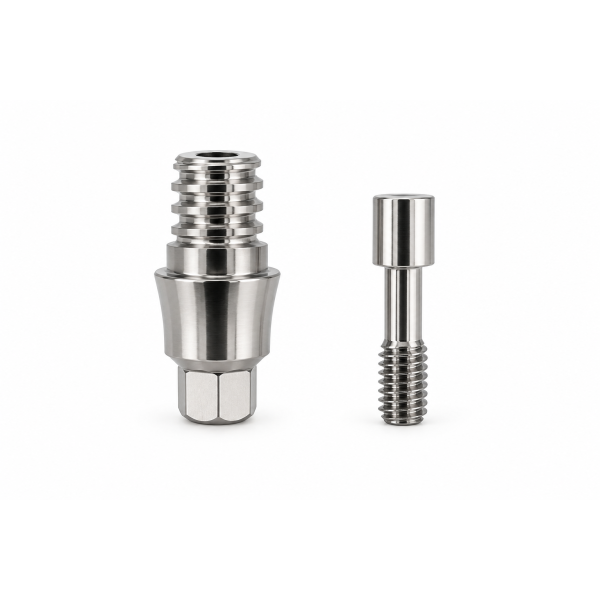
Titanium Base for Implant Internal Hex H2.43 – 2 mm with Screw 1-72 UNF
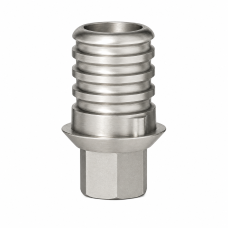
The Titanium Base for Implant Internal Hex H2.43 is a prosthetic component designed to connect a compatible implant with a custom implant-supported restoration. It provides a titanium foundation for restorative workflows that combine a metal implant interface with a custom-designed prosthetic structure.
This 2 mm version features an H2.43 internal hex connection and includes a 1-72 UNF fixation screw for attachment to the implant. Its titanium construction offers strength and corrosion resistance for dental prosthetic applications.
Key Features
- H2.43 internal hex connection: Designed for use with compatible implant interfaces.
- 2 mm size: Supports selection according to the planned restoration and clinical requirements.
- Titanium construction: Provides a durable metal foundation for the prosthetic restoration.
- Fixation screw included: Supplied with a 1-72 UNF screw.
- Custom restorative applications: Intended for use in compatible implant-supported prosthetic workflows.
Package Contents
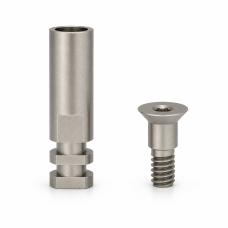
1 × Titanium Base for Implant Internal Hex H2.43 – 2 mm
1 × Fixation Screw 1-72 UNF
Professional Use
For use by dental professionals. Confirm implant compatibility, restorative component requirements, and the recommended tightening torque before use. Follow the applicable manufacturer’s instructions for preparation, bonding, cleaning, and sterilization.

Reviews
There are no reviews for this product, be the first to leave your review.


Titanium Base for Implant Internal Hex H2.43 – 2 mm with 1-72 UNF Screw
Compatibility and Component Selection
Before use, verify the exact implant system, platform, connection geometry, titanium base configuration, and fixation screw compatibility against the manufacturer’s documentation.
The H2.43 designation and 1-72 UNF screw thread alone do not establish compatibility. Confirm that the 2 mm configuration is appropriate for the planned restoration and clinical conditions.
Preparation Before Use
- Check the product identification, package labeling, and component condition.
- Inspect the titanium base and screw for damage, deformation, contamination, or thread defects. Do not use damaged components.
- Verify the labeled sterile or nonsterile status. Do not assume that the product is supplied sterile.
- Process components according to the manufacturer’s validated cleaning, disinfection, and sterilization instructions before clinical use.
Laboratory Procedure
- Design and fabricate the restoration within the approved material and dimensional requirements.
- Prepare the bonding surfaces according to the titanium base, restorative material, and bonding-system instructions.
- Protect the implant connection, screw seat, and screw channel from surface treatment and bonding material.
- Bond the restoration using an approved protocol. Remove excess cement and verify that the screw channel and implant interface remain unobstructed.
- Inspect the completed restoration for fit, integrity, and cleanliness.
Clinical Placement
- Assess the implant and surrounding tissues for suitability for restoration.
- Clean the implant connection and remove debris that could prevent complete seating.
- Position the restoration and verify full seating and correct engagement. Do not force a misfitting restoration into position.
- Insert the approved fixation screw using the matching driver.
- Tighten with a calibrated torque wrench to the manufacturer’s specified torque for the exact implant–base–screw assembly.
- Verify seating, stability, proximal contacts, and occlusion; obtain radiographic confirmation when clinically indicated.
- Protect the screw head and close the access channel using the applicable restorative protocol.
Warnings and Precautions
- Secure small components against accidental swallowing or aspiration.
- Do not modify the implant connection or screw seating surfaces.
- Do not substitute screws or combine components without verified compatibility.
- Incorrect seating or tightening may cause screw loosening, component damage, or restoration failure.
- Follow the labeling regarding single use and any permitted reprocessing.
- Do not use in patients with a known hypersensitivity to any confirmed constituent material.
Cleaning and Sterilization
Use only manufacturer-validated processing methods. Confirm that the processing protocol is suitable for all components of the completed restoration, including the bonding material. A temperature alone does not constitute a complete sterilization protocol.
Storage
Store components in their original packaging in a clean, dry location, protected from contamination and physical damage. Follow any additional storage conditions shown on the product label.