Can You Get Dental Implants with Insufficient Bone?
Insufficient jawbone does not necessarily mean that dental implants are impossible.** Depending on the amount and location of the remaining bone, treatment may involve short implants, bone augmentation, sinus lifting, or a combination of approaches. A clinical examination and appropriate imaging are needed to determine which options are suitable.
Why Is Bone Important for Dental Implants?
Dental implants are placed within the jawbone to support replacement teeth. The available bone must provide an appropriate foundation for implant placement while allowing the dentist to protect nearby structures, including nerves and the maxillary sinuses.
Both the quantity and quality of bone matter. Insufficient bone may affect the height, width, or shape of the area where an implant is planned.
Why Can Jawbone Become Insufficient?
Bone loss or an inadequate bone ridge may be associated with:
- Tooth loss.
- Periodontal disease.
- Previous injury or trauma.
- Developmental differences in the jaw.
In the upper back jaw, the position of the maxillary sinus may also limit the available bone height for implant placement.
How Does a Dentist Assess the Available Bone?
Assessment begins with a review of your medical and dental history, an examination of your mouth, and dental imaging.
A cone-beam computed tomography scan, commonly called a **CBCT scan**, may be recommended to assess the bone in three dimensions. It helps the clinician evaluate the available bone and the position of nearby nerves, tooth roots, and sinuses.
Your dentist will also consider your gum health, smoking status, overall health, and the planned replacement teeth.
What Are the Treatment Options?
1. Short Dental Implants
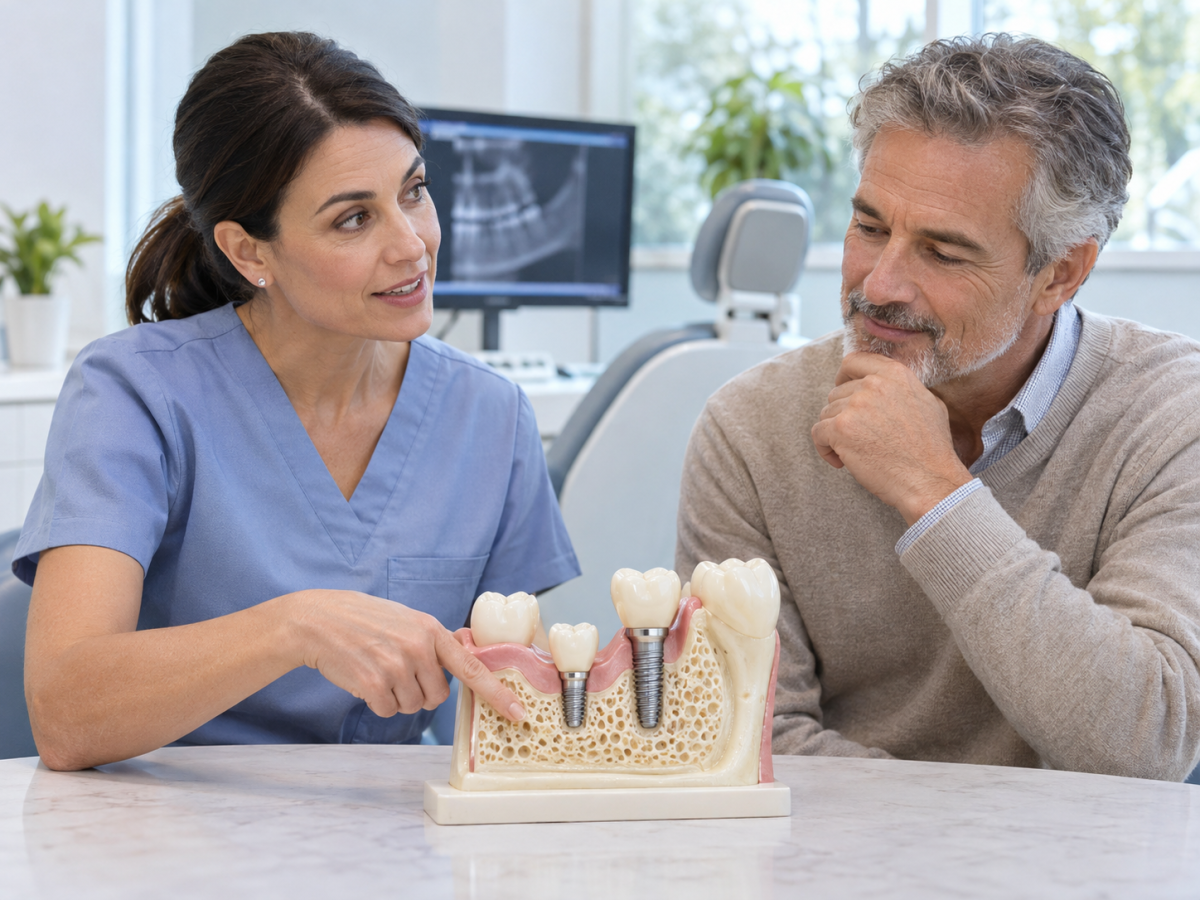
Short dental implants may be considered when bone height is limited. In selected cases, they can provide an alternative to procedures that increase bone height.
However, short implants are not suitable for every situation. Selection depends on the local anatomy, available bone, and restorative requirements. Their use does not automatically eliminate the need for bone augmentation.
Short and standard-length implants may be used in different areas of the same jaw when appropriate for the individual treatment plan.
2. Bone Augmentation
Bone augmentation, also called bone grafting, may be recommended when the bone ridge is inadequate for the planned implant position.
The procedure uses bone or a bone substitute to help rebuild the deficient area. Depending on the extent of the defect, augmentation may be performed before implant placement or, in selected cases, at the same appointment. Healing time varies with the procedure and the patient’s needs.
3. Sinus Lifting
A sinus lift may be considered when there is insufficient bone height beneath the maxillary sinus in the upper back jaw.
This procedure creates space beneath the sinus membrane to develop additional bone for implant placement. Implants may sometimes be placed during the same procedure; other cases require a separate healing period first.
Can I Avoid Bone Grafting by Choosing Short Implants?
Sometimes, but not in every case. Short implants may reduce the need for vertical bone augmentation in selected patients. The decision depends on the remaining bone and the requirements of the planned restoration.
The aim is to choose an approach that provides appropriate support for the replacement teeth while considering surgical risks and long-term maintenance.
How Do I Know Which Option Is Right for Me?
There is no single treatment that is appropriate for everyone with insufficient bone. Your dentist or oral surgeon should explain the available options, their limitations, and the expected treatment stages.
A thorough assessment helps determine whether implants are suitable and whether additional procedures are needed.
Explore Related DMi Clinical Cases
Visit our Clinical Cases section to explore documented treatment sequences involving short and standard-length DMi implants, bone augmentation, and sinus lifting.
Clinical photographs and radiographic records illustrate how treatment was planned for individual patients. Each case is different, and these examples do not guarantee the same outcome for every patient.
To learn more about DMi implants and restorative components, explore our implant collection or contact DMi Technology LLC. For a personal treatment recommendation, consult your treating dentist or oral surgeon.
Today (21:36)
Views: 1