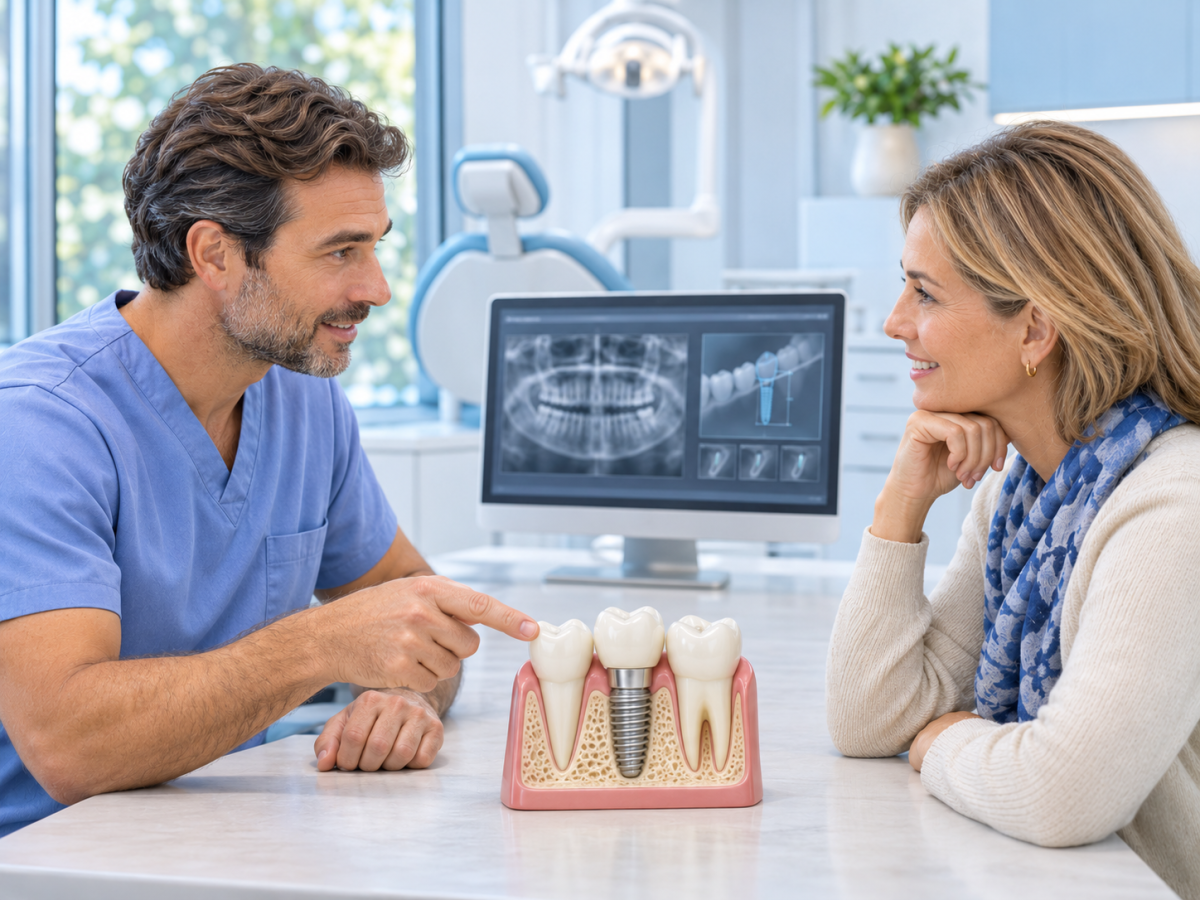
One of the most common questions patients ask is what they can and cannot do before dental implant surgery. Begin preparing in advance, following the instructions provided by your dentist or oral surgeon. Some preparations, such as stopping smoking or reviewing medications, may need to begin several weeks before treatment.
What Should I Do Before Dental Implant Surgery?
During the 7–10 days before surgery, follow your dental team’s recommendations:
- Avoid alcohol and stop smoking as early as possible.
- Maintain a balanced diet.
- Take vitamins or supplements only if recommended by your healthcare provider.
- Try to reduce stress and get adequate rest.
- Follow any activity restrictions recommended for your individual health needs.
Tell your dentist about your medical conditions, allergies, and all medications and supplements you take.
The Day Before Dental Implant Surgery
Your dentist may recommend professional cleaning before surgery. If this is part of your treatment plan, follow the oral hygiene instructions provided afterward.
- Use an antiseptic mouthwash only if recommended, following the prescribed frequency and directions.
- Avoid foods or drinks that irritate your mouth.
- Avoid alcohol.
- Do not stop anticoagulants, aspirin, or other prescribed medications unless your treating clinician specifically instructs you to do so. Medication changes must be coordinated with the prescribing physician.
On the Day of Surgery
1. Avoid foods or drinks that irritate your mouth.
2. Brush your teeth gently.
3. Follow the eating and drinking instructions provided for your type of anesthesia.
4. Use an antiseptic mouthwash only if instructed by your dentist.
5. Take medications according to the plan agreed upon with your healthcare team.
Report any new illness, changes in your health, or changes in your medications before treatment.
Can I Eat Before Dental Implant Surgery?
This depends on the type of anesthesia used.
If your procedure involves local anesthesia alone, fasting is generally not required unless your dentist advises otherwise.
If sedation or general anesthesia is planned, follow the specific fasting instructions provided by your anesthesia team. These instructions distinguish between solid foods and clear liquids, and may vary according to your health and the planned procedure. Do not apply a general fasting schedule without confirming it with your team.
Can I Drink Before Dental Implant Surgery?
For procedures under local anesthesia alone, water is generally permitted unless your dentist gives different instructions.
For sedation or general anesthesia, follow your anesthesia team’s instructions about which liquids are permitted and when to stop drinking. Milk, smoothies, and drinks containing pulp are not clear liquids.
Can I Drink Alcohol the Day Before Dental Implant Surgery?
Avoid alcohol for at least 24 hours before surgery, or longer if instructed by your healthcare team. Tell your dentist or anesthesia provider if you have consumed alcohol during the restricted period.
Which Medications Should I Avoid Before Dental Implant Surgery?
Do not stop any prescribed medication on your own.
Blood thinners, including anticoagulants and aspirin, require an individual assessment. Many patients can continue these medications during dental treatment. Any changes must be agreed upon by your dentist and prescribing physician.
Which Medications Can I Take Before Dental Implant Surgery?
Ask your healthcare team which medications to take on the day of surgery.
Medications for diabetes, hypertension, thyroid conditions, and other medical conditions should be reviewed in advance. Some may require adjustments, especially if fasting, sedation, or general anesthesia is planned. Follow your individual medication instructions.
Can I Smoke Before Dental Implant Surgery?
Smoking increases the risk of implant complications. Ideally, stop smoking as early as possible before treatment and remain smoke-free throughout healing and in the long term.
Ask your dentist about a suitable cessation plan and support. There is no single period of abstinence that eliminates the risks associated with smoking.